Pulse IoT
Engineering Team
Service life modeling of reinforced concrete structures predicts the time required for corrosive agents like chlorides to penetrate concrete and initiate steel reinforcement corrosion using diffusion-based approaches. The foundational work comes from Göran Tuutti's 1980s model, which divides service life into initiation and propagation periods. This framework underlies most contemporary deterministic and probabilistic approaches.
A Survey of Common Models
Life 365
Developed by a consortium of industry partners, Life 365 applies Fick's Second Law of Diffusion with North American field survey data. Available as free software since the early 2000s, it supports economic analysis for lifecycle cost projections including repairs.
Duracrete Model
Employing Monte Carlo probability analysis, Duracrete incorporates European data and accounts for uncertainties in material properties, environmental conditions, and construction quality. Developed in the late 1990s, it provides more nuanced analysis than deterministic alternatives.
Stadium
Created by SIMCO Technologies in 2010, Stadium employs multi-ionic transport and reaction modeling in saturated and unsaturated concrete, requiring lab-determined transport properties and offered through SIMCO's integrated consulting services.
Model Limitations
Traditional models face inherent constraints: they represent theoretical approximations of inherently complex, multivariable phenomena. Real-world corrosion involves material quality, construction technique, temperature, humidity, and chloride exposure variables with compounding effects, creating highly stochastic, unpredictable outcomes.
The Future: IoT Sensors in Service Life Modeling
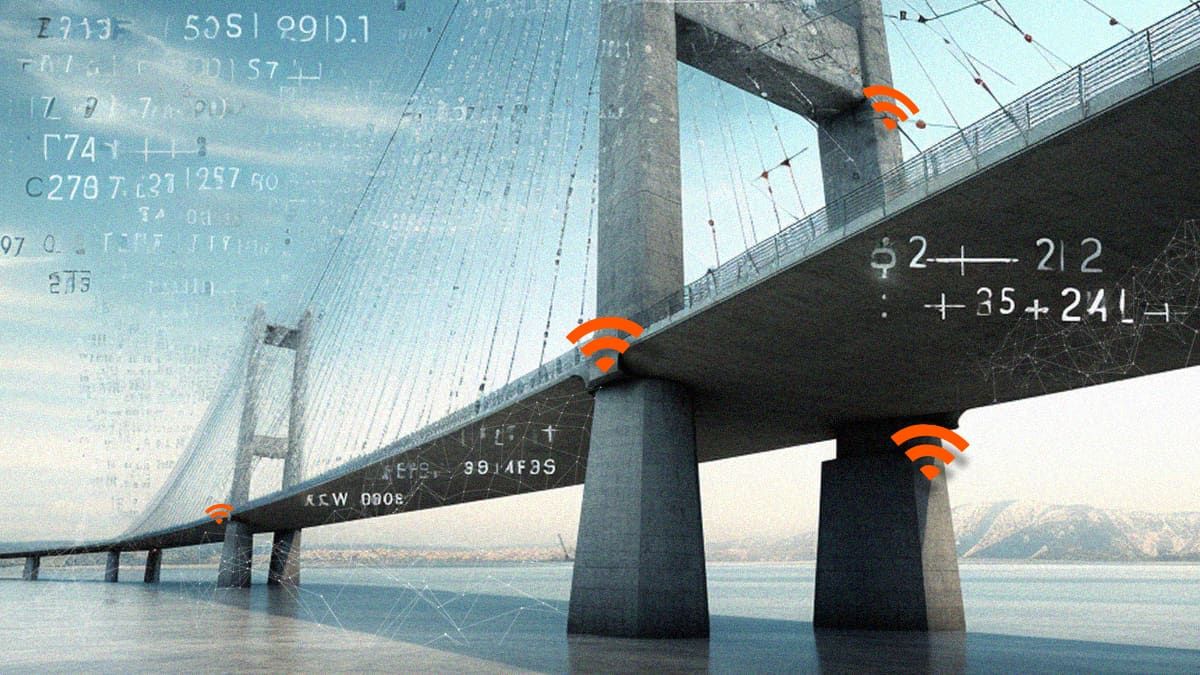
Emerging Pulse IoT Systems collect real-time data on corrosive agent ingress at varying concrete depths, eliminating reliance on theoretical assumptions alone. Rather than replacing traditional methods, these sensors provide empirical data to refine existing models as adoption increases.