Pulse IoT
Engineering Team
Don’t Miss the Opportunity: Deploying Asset Health Monitoring in Structural Repairs
As ageing infrastructure reaches or exceeds its original design life, asset owners face a critical choice: simply repair what is damaged, or use the repair project as a strategic moment to modernise the asset with structural health monitoring (SHM).
Integrating monitoring during repairs turns a necessary cost into a long-term investment. It enables owners to:
- Assure the integrity of repairs for continued operation beyond design life
- Detect deterioration early and intervene before issues escalate
- Validate repair methodologies with real performance data
ACI 562-19, the Code for Assessment, Repair, and Rehabilitation of Existing Concrete Structures, provides a framework for evaluating and restoring existing concrete assets. It emphasises durability, performance validation, and long-term integrity—principles that align directly with SHM.
Below are three key reasons why pairing repairs with asset health monitoring should now be considered essential best practice.
1. Integrity Assurance for Continued Operation
Many critical concrete assets—bridges, parking structures, industrial facilities, marine structures—are now being operated well beyond their original design life. In these cases, the integrity of repairs is not optional; it is central to continued safe operation.
ACI 562-19 requires that repairs consider the durability of the structure as a whole and that appropriate measures are adopted to assure that durability over time. This means:
- Repairs must address existing damage and the structure’s ability to withstand future environmental exposure, loading, and usage patterns.
- The performance of repairs should be verifiable, not assumed.
By embedding structural health monitoring into the repair scope, owners gain:
- Real-time or near-real-time assurance that repaired regions are behaving as intended
- Objective data on load response, cracking, deflection, and environmental effects
- A documented basis for decisions to extend service life or adjust operating conditions
Instead of relying solely on periodic visual inspections, monitoring provides continuous feedback that the repaired structure remains within safe performance envelopes.
2. Early Detection Enables Early Intervention
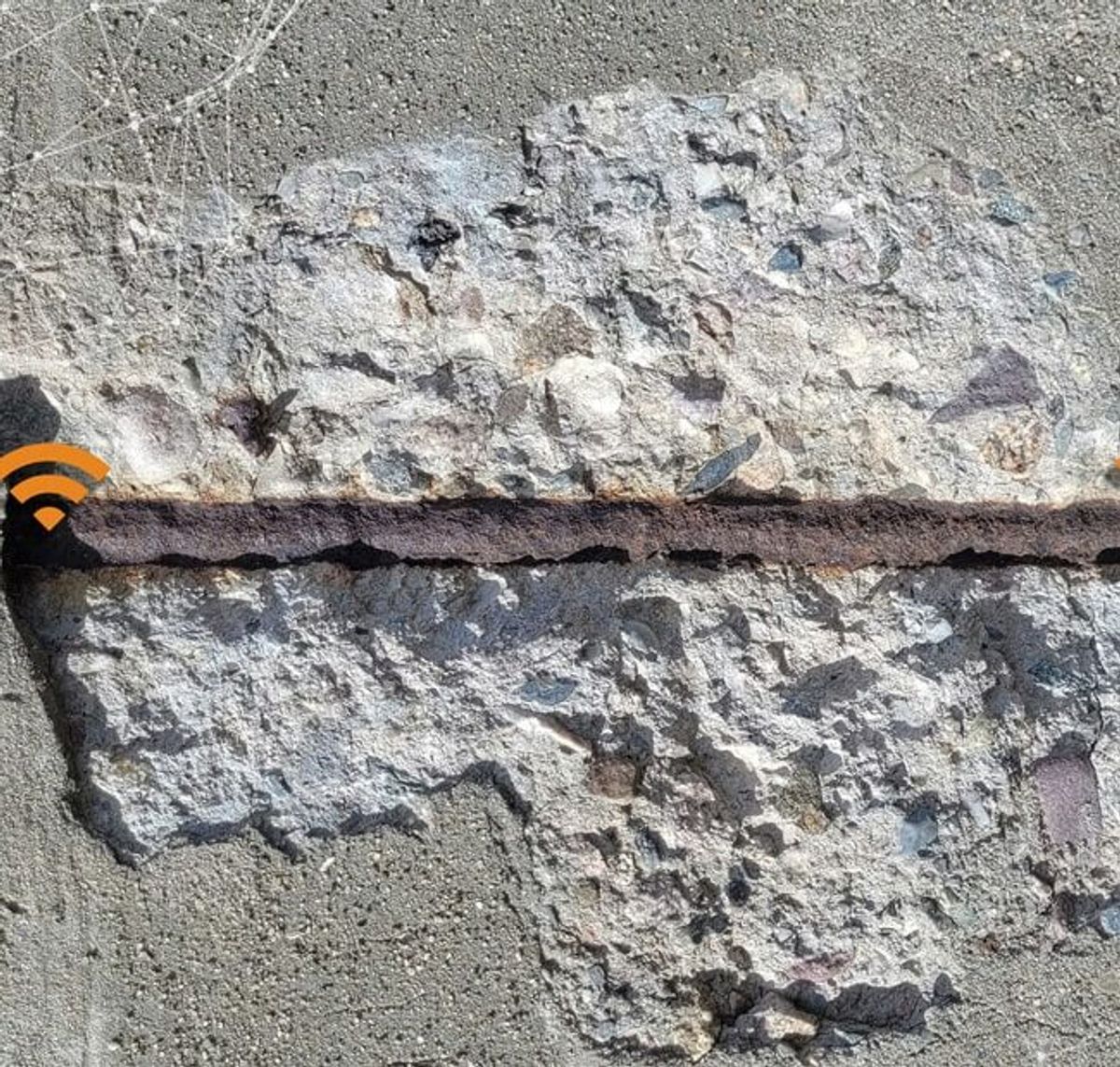
Concrete deterioration typically begins long before visible signs appear. Corrosion initiation, microcracking, moisture ingress, and subtle changes in stiffness can progress unnoticed until they manifest as spalling, major cracking, or loss of capacity.
By the time these symptoms are visible, owners are often facing:
- Larger repair scopes
- Higher direct costs
- Longer outages and operational disruption
ACI 562-19 recognises the value of acting early:
"Maintenance and frequent preventative approaches that occur early in the service life of the structure generally result in improved service life with less interruption and a lower life-cycle cost." (ACI 562-19, Section 8.1.3)
Health monitoring systems operationalise this principle by providing:
- Early warning indicators of deterioration, such as changes in strain, vibration characteristics, or environmental exposure
- Trend data that reveals gradual performance changes long before they become critical
- The ability to plan maintenance proactively, aligning interventions with budget cycles and operational windows
The result is a shift from reactive, emergency-driven repairs to planned, data-informed maintenance that:
- Reduces unexpected repair costs
- Extends the service life of the asset
- Improves reliability and availability for users and operators
3. Validating Repair Methodologies for Performance and Competitive Advantage
For specialist concrete repair consultants, contractors, and material suppliers, long-term performance is the ultimate proof of value. ACI 562-19 places strong emphasis on ensuring that:
- Repair materials are compatible with existing substrates
- Repair systems perform as intended over time
- The interaction between new and existing materials is properly understood and managed
By integrating SHM into repair projects, specialists can:
- Measure post-repair performance under real operating conditions
- Build field-proven case studies with quantitative evidence of durability and effectiveness
- Demonstrate compliance with performance-based requirements and owner-specific KPIs
This creates a powerful competitive advantage:
- Owners gain confidence that selected repair solutions are not just compliant on paper but validated in service.
- Consultants and contractors can differentiate themselves with data-backed performance guarantees and continuous improvement of their methodologies.
Monitoring transforms repair work from a one-time intervention into an ongoing, measurable service.
The Future of Repairs: Proactive, Data-Driven Asset Management
ACI 562-19 provides a robust technical framework for assessment, repair, and durability assurance. The next step is to combine that framework with IoT-based structural health monitoring to create a fully data-driven asset management approach.
When monitoring is integrated into repair projects, asset owners can move from reactive repairs to predictive maintenance, enabling:
- Reduced life-cycle costs through targeted, timely interventions
- Minimised operational disruptions by planning work based on measured condition, not calendar dates
- Enhanced safety and compliance, supported by objective performance records
- Proven repair performance, documented with quantifiable data over the life of the asset
In this context, repairs are no longer just about fixing what is broken. They become a strategic opportunity to:
- Embed intelligence into critical structures
- Extend service life with confidence
- Turn each repair project into a platform for continuous learning and optimisation
Turn Repairs into Long-Term Investments
The opportunity is clear: every major repair project is a natural, cost-efficient moment to deploy structural health monitoring. Access is already established, surfaces are exposed, and stakeholders are engaged—making it the ideal time to install sensors, gateways, and data infrastructure.
By doing so, asset owners and repair specialists can transform repairs from a necessary expense into an investment in resilience, safety, and longevity.
To learn more about integrating structural health monitoring into your next repair project, contact Pulse Technologies today.